


The Chronicles of Suntwe - Chapter 10: Fifty Fifty You Might Make It
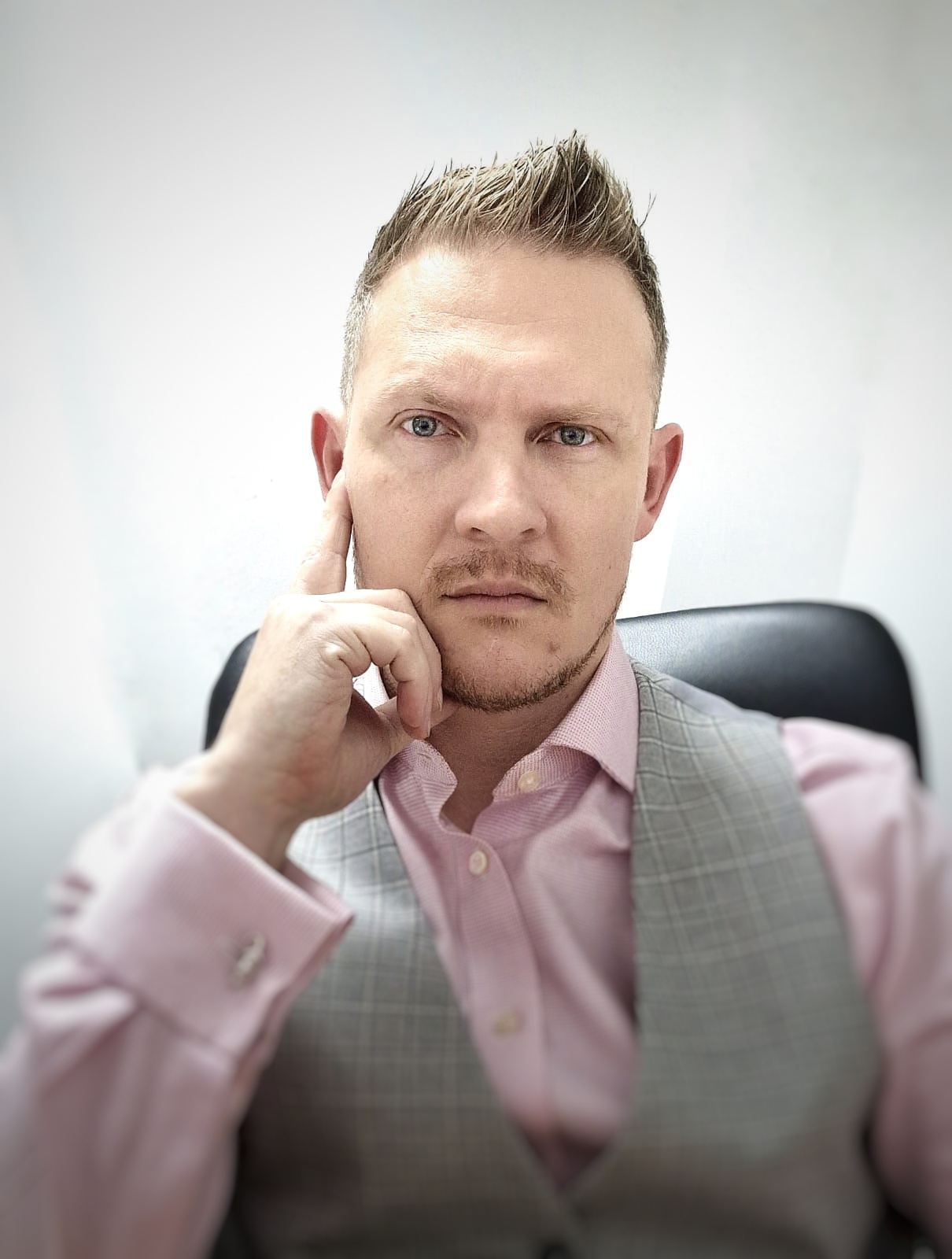
I went to Uganda in March 2016, a year after my father died. I was thirty-one years old and, although I would only understand it many years later, I was already beginning to come apart.
At the time I thought I was doing reasonably well. I was still kayaking, still travelling, still finding adventures and throwing myself into whatever came next. Life had always made more sense to me when I was moving and there was comfort in a river because it demanded your full attention, gave you immediate problems to solve and carried you forward whether you were ready or not. I had always been good at moving forward.
A few months before the Uganda trip I was contacted by Sam Ward, a highly respected freestyle kayaker originally from the UK who had spent years living on the White Nile. He had built a kayak school and river tour company there and competed internationally in freestyle kayaking for years, at one point, I believe, placing sixth at the World Championships.
Sam had approached the International Canoe Federation with an idea to develop freestyle kayaking as a sport in Africa and secured a grant to put together a three week training camp on the White Nile. The plan was to bring together paddlers from across the continent, give them proper freestyle coaching and culminate the whole thing in the first official ICF endorsed African Freestyle Kayaking Championships. He wanted the Zambezi represented and asked if I could help identify one or two of our best local kayakers.
I loved the idea and immediately started speaking to people, although the conversations were remarkably consistent.
“How much do I get paid?”
“You don't get paid,” I would explain. “But the whole trip is covered. Flights, accommodation, food. Everything.”
Then came the look. It was always a mixture of disbelief and amusement, as though I had just suggested they take three weeks off work to practise juggling.
The reality for most local African kayakers is very different from the romantic version of the sport enjoyed by those of us fortunate enough to do it for fun. Many come from villages close to the river and learn to kayak because it offers a way to earn a decent living. They become safety kayakers, raft guides and river guides, and their skill on the water feeds families, pays school fees and keeps roofs over heads. The idea of deliberately doing something dangerous without getting paid for it is, quite understandably, a little ridiculous to them.
One by one they declined because if they were not working, their families were not eating. I understood completely, although I remember feeling disappointed by the cruel practicality of it all. There were paddlers on the Zambezi with extraordinary natural talent, men who had learned to read violent water with an instinct that could never be taught in a classroom, yet circumstance decided how far that talent was allowed to travel.
I passed the news on to Sam and then pretty much forgot about the whole thing until, a few weeks later, an invitation landed in my inbox.
Somebody had nominated me and, to my absolute surprise, I had been selected to represent Zimbabwe and the Zambezi.
I read the message several times.
I had dreamed about kayaking the White Nile for years. Among paddlers it was legendary, a huge volume African river with enormous rapids and a style of kayaking similar to my beloved Zambezi. There was also the very attractive bonus of being able to drive down dirt roads to many of the rapids instead of climbing in and out of the Batoka Gorge, which after years on the Zambezi felt almost offensively luxurious.
There was only one slight problem. I wasn't really a freestyle kayaker.
I could kayak and had spent years charging down big whitewater, perfectly at home in violent rapids, but my approach to the sport had always been about the journey. I loved disappearing downstream, exploring, reading a rapid and committing to a line. Freestyle kayaking was an entirely different discipline built around precision, repetition and technical tricks performed on waves and in holes. The best way I can describe it is that I felt like a breakdancer who had somehow been invited to an elite ballet camp. Technically, yes, we could both dance, but that did not mean I wanted to stand at the barre next to the professionals.
My sense of intimidation increased considerably when I learned Dane Jackson would be one of the coaches. For anyone outside kayaking, imagine being invited to a driving course and discovering Michael Schumacher is going to be teaching you. Dane is whitewater royalty, a multiple world champion freestyle kayaker and an extraordinary expedition paddler who had been kayaking since he was two years old. His father, Eric Jackson, was himself a multiple world champion and the founder of Jackson Kayak. These were people whose videos I had watched and whose names appeared in magazines and conversations around campfires.
Apparently I was going to Uganda to train with them.

I was excited, but I was also fairly convinced somebody had made a clerical error.
The journey began in Bulawayo with a flight to Johannesburg, where I met the other paddlers travelling from southern Africa. Julius Nalishebo had been selected from the Zambian side of the Zambezi and seeing him immediately felt familiar. Julius was a Zambezi brother. Philip Claassens and Tammy Muir were coming from South Africa, and Melusi Magagula from Swaziland. I had paddled with Philip before in the Eastern Highlands of Zimbabwe, on the Vaal River in South Africa and on the Umzimkhulu near Pietermaritzburg, so it was good to see familiar faces and settle into the easy banter of people who shared the same strange love of moving water.

The flight from Johannesburg to Nairobi passed easily as we caught up, shared stories and talked about the weeks ahead. Philip had been to Uganda before and spent much of the journey giving us beta on the river, talking through rapids, waves and lines while I absorbed every detail and became increasingly excited about finally seeing a river I had imagined for so long.
The flight from Nairobi to Kampala was where the trip began to go slightly sideways.
Melusi and I checked our boarding passes and saw that we were seated together. He had the window seat and I was in the middle, with a stranger in the aisle. When we reached our row there was already a very large woman sitting in the aisle seat who looked at us and made absolutely no indication that she intended to stand up.
I lifted my bag into the overhead locker and, as I manoeuvred it into place, very gently brushed past her shoulder.
She screamed.
“My eye! My eye! He hit me! He hit me!”
She launched herself across the other seats clutching her face with both hands and wailing while I stood frozen in the aisle. Every head around us turned and I suddenly found myself looking from one passenger to another, desperately repeating that I had not hit her and had barely touched her shoulder. Nobody looked particularly convinced.
The cabin crew rushed over, questioned me briefly and told me to keep quiet and take my seat while they dealt with the situation. Unfortunately, my seat was beside the woman I had apparently just blinded, so for the next two hours I sat trapped next to her while the performance continued.
The cabin crew kept bringing her ice for her eye. She groaned and wailed and periodically renewed her suffering whenever somebody came near. Eventually they brought her a pen and a piece of paper and, although I tried very hard not to look, I obviously looked.
She was writing down the details of her lawyer.
My heart sank.
I had left Zimbabwe to fulfill a dream of kayaking the White Nile and was now mentally preparing myself to be arrested the moment we landed because my shoulder had lightly brushed a woman while putting a bag in an overhead locker. By the time we reached Uganda I had imagined every possible outcome and most of them involved me trying to explain my innocence from the wrong side of a set of bars.
When the aircraft finally landed, the woman stood up and walked off without a word. I remained seated until most of the passengers had disembarked because there was no chance I was squeezing past another human being. At that point I would rather have waited for the plane to return to Nairobi than risk brushing somebody's elbow and being charged with attempted murder.
I cautiously made my way towards the exit, where one of the cabin crew stopped me and pulled me aside. My heart stopped with her.
Here we go, I thought.
She lowered her voice and told me not to worry. Apparently this sort of thing happened regularly. The woman was running an insurance scam and would make a claim against Kenya Airways in the hope of getting a payout. I had simply been the unfortunate prop chosen for that day's performance. The flight attendant told me to forget the whole thing and enjoy Uganda.
I was enormously relieved and more than a little pissed off. She could have told me that two hours earlier. Instead I had spent the entire flight imagining the inside of a Ugandan prison while the woman beside me iced an eye I had never touched.
We arrived at Entebbe at around ten that night. Sam had arranged for a driver to collect us and take us to the river, a distance of only about one hundred and twenty kilometres which, in my experience, meant an hour or so in the car. When I was told it would take between five and seven hours I laughed because I assumed they were joking.
They weren't.
“Shotgun!”
I have always liked sitting in the front.
Philip laughed and told me I had clearly never been there before, then climbed into the back of the van, made himself comfortable and went to sleep. I soon understood why. For hours I sat in the front watching vehicles appear from the darkness, motorcycles weave through impossible gaps and drivers make decisions that seemed to rely heavily on divine intervention. Philip slept peacefully behind me while I stared through the windscreen wondering whether I had survived the plane incident only to die in a head on collision somewhere outside Kampala.
By the time we reached Nile River Explorers Backpackers Lodge it was the early hours of the morning and I was exhausted, but then the sun came up over the White Nile and the whole journey seemed to disappear from my mind.

I stood looking across the vast river as the first light spread over the water. Birds called from every direction and the air was already hot and humid, carrying that particular smell of tropical Africa in the morning when damp earth and vegetation begin warming in the sun. The stress of the journey vanished and the excitement returned.
Breakfast certainly helped. There were piles of watermelon and pineapple and I genuinely do not know what Uganda does to its fruit, but I have never tasted anything quite like it. The pineapple was so sweet and intense it made the stuff I had eaten elsewhere seem like a vague pineapple flavoured suggestion.
The White Nile itself looked surprisingly familiar. In many places it reminded me of the Zambezi above Victoria Falls, wide and wild, with huge volumes of water moving between islands and thick vegetation. The major difference was that the rapids were spread along this open landscape rather than buried deep inside a gorge. You could actually drive to the river, which I cannot adequately explain felt obscenely luxurious to a Zambezi kayaker accustomed to sweating his way into and out of the Batoka Gorge.
The first few days were exciting as we were issued our kayaks and settled into the training programme Sam had structured. We watched videos of different freestyle tricks and broke down the movements before taking the boats onto flat water to practise the mechanics, then gradually moved onto the river and began applying what we had learned to actual features.
We spent time at Super Hole, a fantastic little surf spot with a huge eddy beside it where everyone could sit together in their kayaks, watch each paddler take a turn and receive coaching before going back for another attempt. Most sessions ended with King of the Wave, which is exactly the sort of game kayakers invent when left unsupervised. Everyone piles onto the feature at the same time and tries to knock everyone else over, push them off the wave or generally make their life difficult until the clock runs out. Whoever remains on the wave at the end wins. It is chaotic, childish and brilliant.
We also trained at Club Wave and Nile Special further downstream. These were completely different beasts, big, fast, bouncy waves with enormous power. To get onto them you used a ski rope attached to the bank, holding the handle and allowing the current to swing you out into the feature.
The others were loving the training.
I was struggling to settle into it.
One particular day the doubts had really got hold of me and I was emotionally down, with the intrusive thoughts louder than usual. The belief that I did not deserve to be there had followed me from the moment I received the invitation. The paddlers I had originally approached from the Zambezi were better freestyle candidates than me and they had only turned down the opportunity because they could not afford to take three weeks away from work. Somewhere in my head I had decided that made me the consolation prize.
I was also painfully aware that freestyle was not my world. Give me a river and tell me we are going to charge downstream through whatever is waiting and I am happy. Give me a wave and tell me to repeat the same technical movement twenty times while somebody analyses my body position and my enthusiasm begins to fade. I felt like the breakdancer at ballet class again, perfectly capable of moving but painfully aware that everyone around me seemed fluent in a language I was still trying to translate.
By the time we were training at Nile Special that day I was tired and disheartened. I had already had a few surfs and knew I had probably done enough, but I decided to have one last go.
I grabbed the handle of the ski rope and allowed the current to carry me out. The kayak slid onto the wave and immediately began bouncing beneath me as Nile Special's enormous energy picked the boat up and dropped it again. Then one bounce launched me higher than the others and the kayak turned sideways in the air. As I came down my paddle caught the current at exactly the wrong angle and the force ripped my shoulder out of its socket.
I knew instantly that something had gone badly wrong. I was upside down in the water and instinctively tried to roll, but my arm simply would not respond. It hung uselessly from my shoulder while I flailed beneath the surface, trying to persuade my body to perform a movement it had done thousands of times before. Eventually I gave up, pulled my spray deck and ejected from the kayak.
When I surfaced I tried to swim and discovered that one arm worked and the other was, for all practical purposes, no longer involved in the proceedings. I grabbed hold of my upside down kayak and allowed the current to carry me downstream.
Through the spray I saw David Egessa paddling frantically towards me with Dane following behind him. David was already a legend among the Ugandan paddlers and he moved across the water quickly. When he reached me I looked at him and said the first thing that came into my head.
“My shoulder is fucked.”
I knew my paddling was over.
They got me to the riverbank and, when David saw the state of my shoulder, he went to find Sam. For the next hour we tried to put it back in, but the muscles around the joint had seized and every attempt became an increasingly painful exercise in futility. Eventually Sam decided we needed a doctor.
There was one problem. It was Easter Sunday.
Sam somehow managed to organise a vehicle and loaded me into it for the three and a half hour drive into town along what must surely have been one of the bumpiest dirt roads in Uganda. Every pothole sent a bolt of pain through my shoulder. The joint was still hanging out of place and there was no comfortable position to sit in, yet for some reason I was in remarkably good spirits.
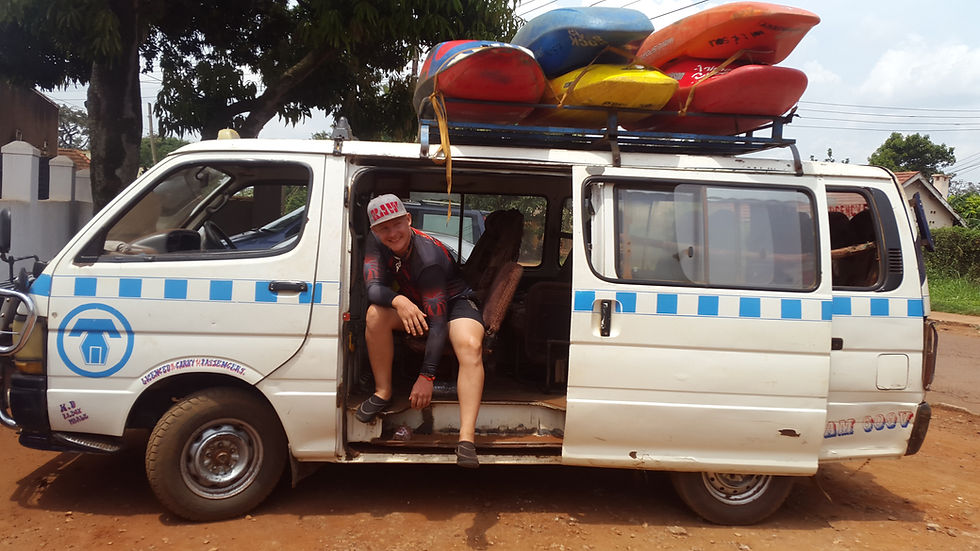
Pain does strange things to me and I tend to become increasingly full of shit. The worse a situation gets, the more likely I am to start making jokes and taking the piss out of myself. I do not know when I learned to deal with things that way, but it has carried me through some fairly unpleasant moments.
Sam had called ahead and found a German expat doctor who had agreed to see me at her house. When we arrived she took one look at me and her face gave her away immediately. I was filthy, exhausted and sitting there with my shoulder visibly out of place, yet still making stupid comments and laughing, and she seemed genuinely surprised by how cheerful I was.
She had me lie down on the floor, planted her foot into my armpit, grabbed my arm and pulled with all her might.
Nothing happened.

She tried again and the shoulder refused to move. The muscles had completely seized around the joint and at some point the jokes began about my guns being too big and the doctor being unable to overcome the immense power of my ridiculous arms. I was wincing in pain and laughing at the same time while this poor German woman put everything she had into trying to relocate my shoulder.
Eventually she moved us onto the verandah and cleared her dining room table.
It felt exactly like one of those films where the hero has been shot and cannot go to hospital, so his friends take him to a dodgy doctor who sweeps the dinner plates aside and starts operating. There I was, in Uganda, lying on a dining room table while a German doctor and Sam took turns yanking my arm with everything they had.
They would pull, stop, reposition me and try again. Between attempts I was given an injection of muscle relaxant in the hope that the muscles would finally release their grip. Each attempt hurt like hell and I winced, swore and continued making stupid comments because silence somehow felt worse.
More than two hours after we had started, my shoulder finally went back into its socket and the relief was immediate. One second my entire world was pain, pressure and a deep physical wrongness, and the next everything was where it belonged again. I lay on a German doctor's dining room table on a verandah in Uganda and felt enormously grateful for the simple pleasure of having all my bones in roughly the correct places.
My paddling trip was over, so for the remainder of my time in Uganda I became the dedicated cameraman. I followed everyone around filming the training sessions and antics, watched the competition from the sidelines and cheered for my friends. If I am completely honest, part of me was relieved because I no longer had to compete. The pressure I had been putting on myself disappeared with the use of my shoulder and I could simply enjoy being there, camera in hand, surrounded by kayakers on the White Nile.
Eventually the trip ended and I flew home.

Two weeks later I developed a fever.
I thought little of it and tried to sleep it off, but the headaches became excruciating and I sweated constantly until I disappeared into a haze that I remember only in fragments. My mum came to visit me and apparently found that I had been unresponsive for two days. She took one look at me and insisted I go to hospital, loading me into her car and driving me to the emergency room, where somebody put me in a wheelchair and took blood samples.
The doctor disappeared with the results and when he returned he looked at me with the wonderfully comforting expression of a man who had just found something very wrong.
“You have one of the worst cases of Malaria I have seen. Your organs are already shutting down and I am admitting you to the I.C.U immediately.”
He paused.
“50/50 you might make it.”
Then he walked out.
Zimbabwean bedside manner.
I do not remember much of the next seven days in any sensible order. There are pieces of it that still sit clearly in my mind and great stretches that are simply gone. I remember vomiting black sludge for days and I remember the headaches. More than anything, I remember reaching a point where death stopped frightening me and began to sound like relief.
At some stage I spoke to God and told Him I had had enough. I asked if I could please just die now.
I meant it.
I was exhausted and in pain and wanted it to stop, but apparently I was not getting off that easily.
I spent seven days in intensive care before I was finally discharged. The malaria had been eradicated from my system, but the damage it left behind would take far longer to understand, and I returned home to a life that was already struggling under its own weight.
We had been going through serious financial problems and could no longer afford the place we were living in, so my wife and 4 year old little boy were moving back into my mum's house. The move happened the weekend after I came out of hospital. I should have been helping, but I could barely stand for long periods and remember watching people carry boxes while I tried to make myself useful, feeling utterly pathetic because my body simply had nothing left to give.
My stomach had taken such a beating from the malaria that eating solid food caused extreme pain and for about three weeks I lived on Futurelife shakes because that was all I could manage. I had gone to Uganda to represent Zimbabwe and the Zambezi at an international kayaking camp and, a few weeks later, I was weak, broke, living with my family at my mother's house and drinking my meals because my stomach could no longer cope with food.
Life can change remarkably quickly.
The malaria also did something to my mind. The 2 years that followed were filled with depression and violent mood swings and I did not understand what was happening to me. My thoughts became darker and the heaviness that had been building since Dad died seemed to settle over everything.
I was living mostly in Victoria Falls and stayed close to the river and the bush because they had always been my medicine. They were still beautiful and I knew they were beautiful. I could stand on the banks of the Zambezi and understand intellectually that I was looking at one of my favourite places on Earth, yet something inside me no longer responded in the same way. The spark had gone.
I carried on anyway. I still went to the river and still spent time in the bush. I even found ways to paddle despite the damaged shoulder, which would lead to another story and one of the proudest adventures of my life, but at the time I was completely lost and genuinely believed I would never come right again.
More than anything, I felt defeated.
Looking back now, I can see a shape to those years that was completely invisible while I was living them. The process had begun when Dad died and something in me had been wounded by his death, but I had carried on moving because movement was what I knew. Then came Uganda, the shoulder, malaria, intensive care, financial collapse and the slow deterioration of my mental health. Life seemed to be dismantling me piece by piece and I had no idea why.
Perhaps, in some ancient story, the gods would have called it a death. I certainly would not have called it that at the time because I was still alive, still getting up in the morning, still laughing and making stupid jokes and still going to the river.
Yet the man I had been was dying, and I had no idea there would eventually be a rebirth.
That part would take years.
Reflection
There is a version of suffering we like to talk about once it is safely behind us. We tidy it up, find the lesson and draw a straight line from the pain to the person we eventually became, convincing ourselves that every terrible thing happened for a reason.
I cannot do that with this period of my life because when I was lying in intensive care asking God to let me die, I was not learning resilience. When I came home and watched my family move because we were broke while I was too weak to carry a box, I was not secretly becoming stronger. When I stood beside the Zambezi and felt nothing where there had once been wonder, I had no sense of transformation taking place.
I was suffering. I was lost and I had no idea how long it would last.
It is only now, with years between me and that man, that I can look back and see the beginning of a much longer process. My father's death had cracked something open in me, Uganda and malaria tore the crack wider, and the years that followed would take me lower still before I finally began climbing out.
My rebirth did not happen in an intensive care unit. It took years and there were failures still to come, mistakes I had yet to make and parts of myself I would have to confront before I could begin building anything new. The man I am today was still a very long way away.
Perhaps that is why I feel so strongly about people who find themselves in a dark season and believe their life is over. I know that feeling. I know what it is to look at the things you once loved and wonder why they no longer reach you, and I know what it is to feel defeated by your own mind and frightened that the person you used to be has disappeared forever.
I also know something now that I could not have known then.
You cannot always see the next version of yourself from the ruins of the last one.
Sometimes there is a long, heavy period in between, a wilderness where no great revelation arrives and no clear path appears. You may simply wake up, survive another day and go to bed. You may keep returning to the river even when the river has lost its magic. You may carry on for no better reason than some stubborn little part of you refuses to stop, with no idea what you are carrying on towards.
I wish I could go back to that broken man in Victoria Falls and sit beside him for a while. I think I would recognise the heaviness in him immediately, although I doubt he would want a lecture and I certainly would not give him one.
I would simply tell him that one day the colour returns. I would tell him that he finds his fire again and that it burns differently after everything he has been through. I would tell him that the long, painful death he thinks he is suffering will eventually make room for a man he cannot yet imagine.
Then I would tell him to keep going.
The gods weren't finished with him yet.


Comments